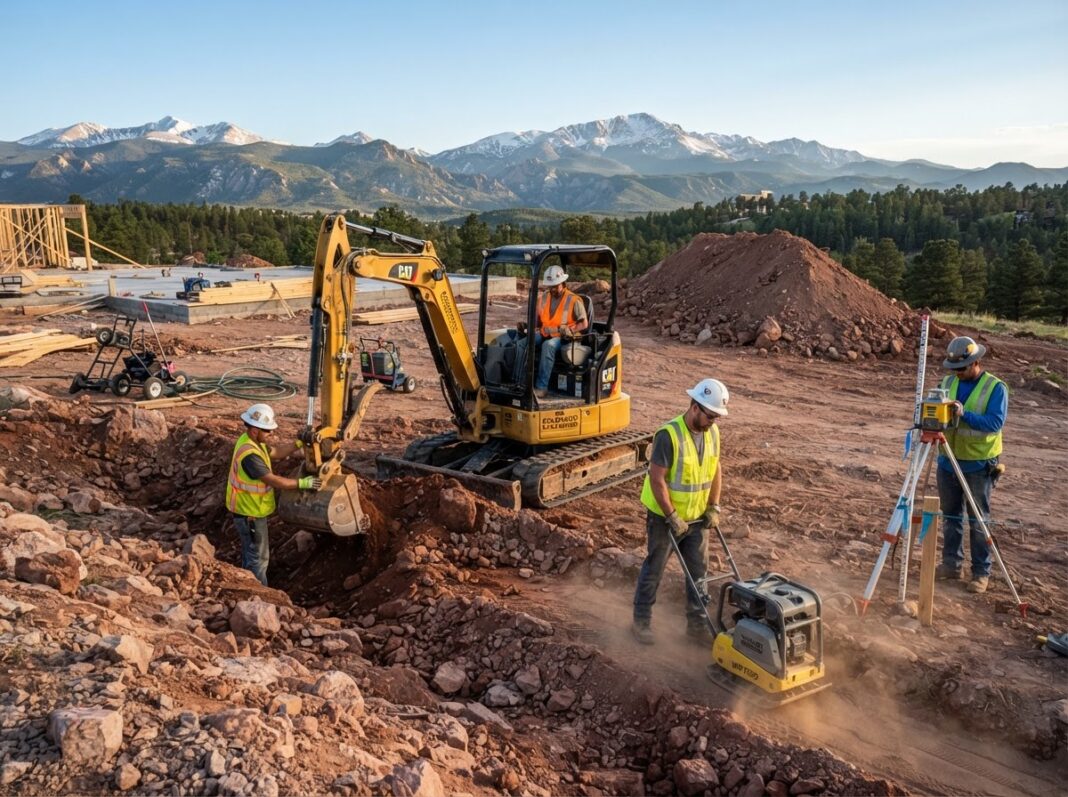

An excavation estimate covers more than the time an excavator spends digging. Access, equipment mobilization, clearing, material handling, hauling, and specified finish work can all affect the scope. Showing those activities helps customers connect your price to the requirements of their property rather than assume they are paying only for machine hours. Colorado excavation guidance recommends explaining these cost drivers alongside the proposed work.
How to attract qualified homeowners for excavation jobs in Colorado.
The goal is transparency: making the estimate easier to understand, not simply defending the total.
Start With the Conditions on That Property
Two projects with similar dimensions can require different approaches.
Colorado contractors identify access, soil, rock, groundwater, and space for storing excavated material as factors that influence excavation scope and cost. Those conditions vary by site; they should not be assumed just because a property is in Colorado.
A site walkthrough, annotated photo, or short video can explain:
- Where equipment and trucks will enter.
- What needs clearing or removal.
- Where material can be stockpiled.
- Which conditions remain uncertain.
- What preparation is needed before the main excavation.
That gives the customer a visible starting point for the estimate.
Show the Work Required Before Digging Begins
A customer may see a machine arrive and think that is when the project starts. Your scope may also include establishing access, clearing the work area, removing unsuitable surface material, or preparing a staging area.
Western Colorado excavation guidance describes homesite preparation as potentially involving topsoil stripping, access construction, cut-and-fill work, and grading—not just foundation digging.
Show the steps that actually apply to your job. Pair each image with a plain-language description and, where appropriate, identify the corresponding estimate item.
For example:
“This section of the scope covers preparing the access route and clearing the work area before excavation. These photos show the existing conditions that influenced that work.”
Keep the explanation specific. Don’t imply that every project needs the same preparation.
Explain Why Access Changes the Approach
An open site with room for equipment and trucks is different from a property with narrow entrances, steep approaches, or limited working space.
Colorado excavation guidance notes that truck turning room, gates, grades, and staging space influence equipment selection and material movement. Mobilizing the appropriate equipment can also be a separate cost.
Photos can make these constraints understandable. Show the access route and explain how it affects the work sequence or equipment choice.
Avoid claiming a precise cost increase unless your estimate supports it. The useful connection is between the site condition, the required task, and the proposed scope.
Make Material Handling and Hauling Visible
Customers may focus on what comes out of the ground without considering where it goes.
Excavated material may be retained for suitable reuse, moved within the site, or hauled away. If suitable material cannot be stored on site, handling and trucking requirements can change. Imported fill may also be needed where excavated material is unsuitable for the specified purpose.
Document relevant activities such as:
- Separating material intended for reuse.
- Loading trucks for haul-off.
- Delivering specified fill.
- Placing and compacting material where included.
Explain whether hauling, disposal, imported material, and testing are included in the estimate. Don’t let photos imply that all of those services are automatically part of every proposal.
Describe How Unknown Conditions Will Be Handled
Showing site preparation can explain what is known, but it cannot eliminate every underground uncertainty.
Colorado excavation guidance identifies rock and unsuitable or wet ground as conditions that may change the excavation method or require additional work. It recommends agreeing in advance on how those changes will be handled.
Your content can explain your process:
“Our estimate is based on the conditions and information available at the time of assessment. If additional work becomes necessary, we document the condition and explain the proposed scope and price change before proceeding under the agreed terms.”
Use wording consistent with your actual contract. Keep allowances, exclusions, and change-order provisions clear in the written estimate—not only in a social post.
Help Customers Compare Complete Scopes
A lower total may reflect a different scope, pricing structure, or assumption. It does not automatically mean another contractor has overlooked something.
Give customers specific items to compare:
- Mobilization and access preparation.
- Clearing and removal.
- Excavation quantities and limits.
- Hauling and disposal.
- Imported fill and placement.
- Finish grading.
- Allowances and excluded conditions.
Colorado excavation guidance recommends comparing these elements and distinguishes lump-sum, hourly, and unit-priced bids because they assign uncertainty differently.
Turn the Process Into a Useful Project Story
For suitable projects, capture the original conditions, preparation stages, excavation, material handling, and completed scope. Add concise captions explaining what each stage contributed.
Obtain permission before publishing, protect sensitive site information, and avoid presenting images as independent proof of compaction, drainage performance, or compliance. Support technical claims with the relevant measurements, tests, and project records.
The finished site shows what your crew delivered. Showing the preparation helps explain the work required to deliver it—and gives Colorado customers a clearer basis for understanding your excavation estimate.
How to attract qualified homeowners for excavation jobs in Colorado.