
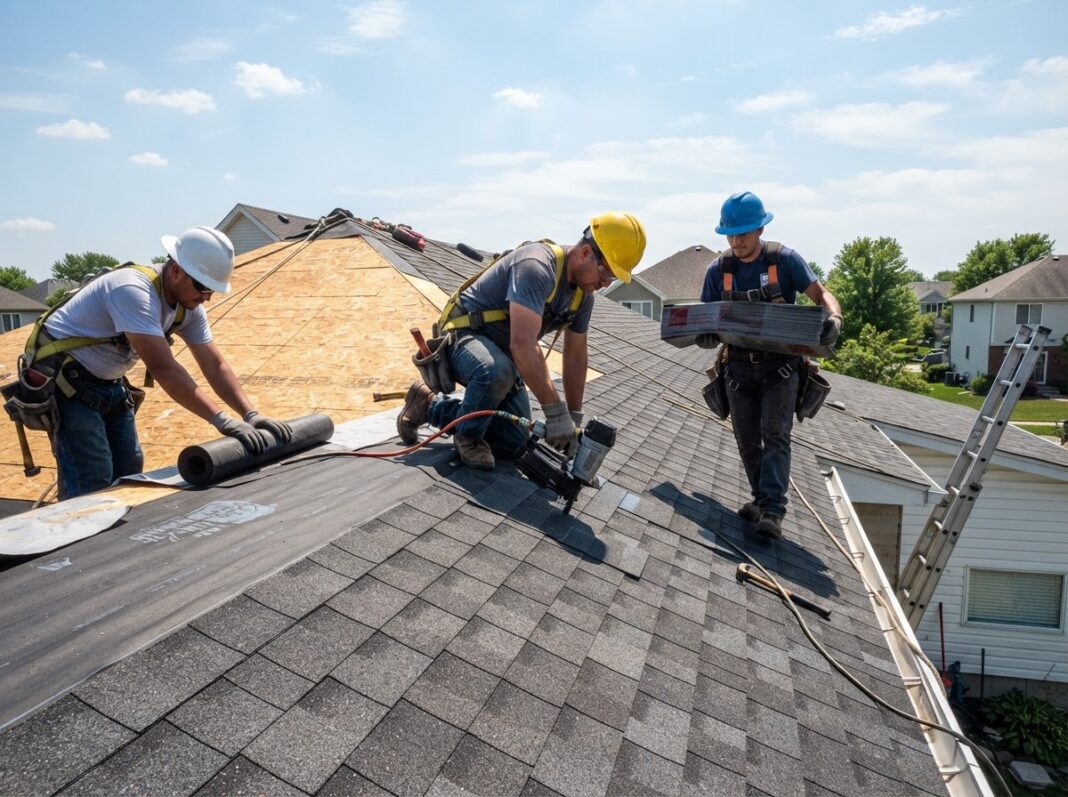

Full roof replacements deserve a place in your portfolio. They show the scale of your work, the materials you install, and the finished appearance of a property. But if your company also handles repairs, inspections, maintenance, or storm-damage work, a replacement-only gallery tells an incomplete story. Roofing marketing guidance recommends showcasing the range of projects your company actually completes—not just its largest jobs.
Your portfolio should communicate range: helping prospective customers recognize that you handle the type of roofing work they need.
Help Homeowners Recognize Their Own Problem
A homeowner concerned about damaged shingles or a problem around a roof penetration may not see their situation reflected in a gallery of complete replacements.
Repair examples give that visitor something more relevant to examine. Roofing project-content guidance recommends documenting visible issues such as damaged materials, flashing problems, and affected areas around vents, alongside the completed work.
For each example, explain:
- What concern prompted the customer to contact you.
- What your team found, based on the documented assessment.
- Which work your company performed.
- What the completed photos show.
Keep the scope clear. If you repaired one section, describe it as a repair—not as a transformation of the entire roofing system.
Make Smaller Jobs Easier to Understand
A full replacement often produces an obvious visual change. A targeted repair may be harder to appreciate from a photo taken across the street.
Combine an overall property view with close-ups of the affected area and the finished work. Roofing photography guidance recommends using both wide shots for context and detailed images to document specific conditions.
A short caption can explain what the viewer would otherwise miss. For example, if it accurately reflects the job:
This project involved repairing damaged shingles in a limited section of the roof. The images show the affected area before work and the completed repair—not a full roof replacement.
That precision makes the portfolio useful without overstating what the images establish.
Show the Work Behind the Finished Surface
Completed-roof photos don’t reveal every stage of a project. Selected progress images can show preparation, conditions uncovered during the work, and repairs made before those areas are covered.
Roofing project-content guidance recommends documenting relevant preparation stages and hidden problems, such as damaged decking, before repairs begin. These images can help explain the scope of a project more clearly than finished photos alone.
Use captions to identify what is shown and why it mattered. Photos can support an explanation, but they don’t independently prove technical compliance, leak resolution, or long-term performance. Tie those claims to appropriate project records rather than relying on appearance.
Make Your Other Services Visible
If you offer inspections, maintenance, emergency tarping, or related services, make those offerings clear alongside your project examples. Roofing marketing guidance recommends listing services individually and connecting them with relevant website content.
Not every service needs a dramatic before-and-after comparison:
- A repair can use close-ups and a scope summary.
- An inspection can use an authorized example of documented findings.
- Maintenance content can explain the work performed.
- Emergency work can show the temporary measure while clearly distinguishing it from a permanent repair.
Only include services your company actually provides, and describe the work accurately.
Organize the Portfolio Around Customer Needs
A large, unstructured gallery makes visitors do the sorting themselves. Grouping projects by service type helps them find relevant examples.
Roofing marketing guidance recommends organizing before-and-after galleries by service, with categories such as replacements, repairs, and storm-damage work.
Each project entry can include the roof type, materials involved, general location when appropriate, and a concise scope description. Those details help explain what the photos represent and make the portfolio more useful during customer research and sales conversations.
Build Documentation Into Every Suitable Job
You don’t need a lengthy case study for every repair. A small project may provide a useful photo pair, a brief portfolio entry, or an example for an estimate discussion.
A repeatable documentation routine can include:
- Confirm permission to photograph and publish the project.
- Capture overall views and relevant details before work.
- Record the project scope and basic information.
- Photograph useful stages without interfering with operations.
- Recreate the original viewpoints after completion.
- Label the images and choose the appropriate marketing format.
Roofing content guidance recommends making this process part of the job itself, then using larger projects as case studies and smaller jobs as social posts, portfolio additions, or sales examples.
Full replacements show an important part of your business. A broader portfolio helps customers understand the rest—so someone who needs a repair or another service can see relevant experience rather than assume your company only handles complete reroofing projects.