
Why Showing Your Landscaping Process in Alabama Can Help Explain Your Pricing
A finished landscape photo shows homeowners the result. It doesn’t show all the assessment, preparation, labor, and material handling that contributed to the price. Sharing selected stages of your work helps customers connect an estimate to the actual requirements of their property—not just the plants or pavers they see at completion. Landscaping estimating guidance recommends documenting site conditions and breaking projects into preparation, delivery, installation, and cleanup.
How to attract qualified homeowners for landscaping jobs in Alabama.
The goal is transparency: explaining what the project requires rather than simply defending your rate.
Start With the Property—not Just the Finished Design
Two Alabama properties can need different amounts of work even when the requested improvements look similar.
Alabama Cooperative Extension recommends evaluating existing features, utilities, sun exposure, soil characteristics, and slope before developing a landscape plan. Those conditions help determine which plants and construction features are appropriate.
Show how you assess the actual site. A short walkthrough or annotated photo can explain:
- What will remain and what needs removal.
- Where access affects equipment or deliveries.
- Which areas require preparation.
- What conditions influenced the proposed layout.
Don’t describe every Alabama yard as having the same soil or drainage challenges. Show what you found on that property.
Make Preparation Visible Before It Disappears
New planting beds, sod, and hardscapes can conceal much of the work underneath them.
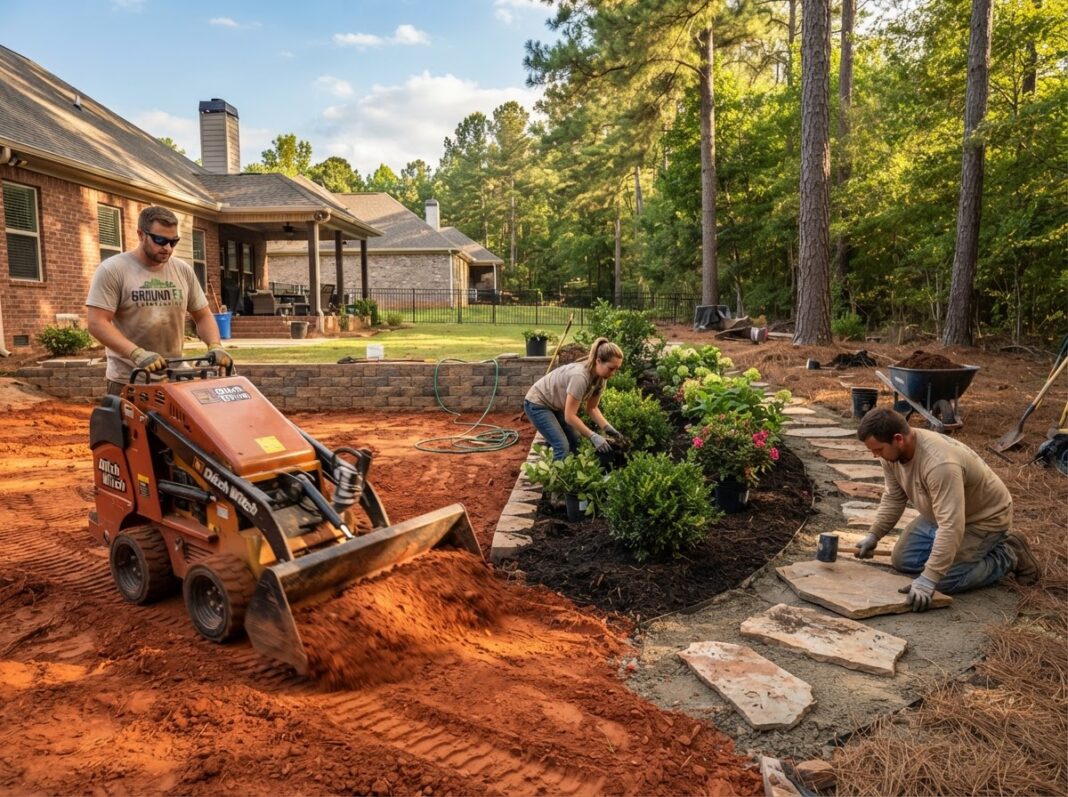
Document relevant preparation such as clearing, removal, grading, soil work, and material placement. North Alabama site-preparation guidance identifies drainage, slope, soil, vegetation, and access as factors that determine the work required.
A useful caption might say, if accurate:
Before installing the new planting bed, our crew removed the existing vegetation and prepared the area shown here. This preparation is included in the project scope alongside the plants, installation, and cleanup.
That makes an estimate line item concrete without suggesting every project requires the same steps.
Explain Why Site Conditions Affect Labor
A homeowner may compare two projects by square footage. Your crew also has to account for how the work can be performed.
Restricted access, existing vegetation, compacted soil, wet areas, or rocky conditions can affect labor and material requirements. Landscaping estimating guidance specifically recommends assessing these factors during the site visit rather than relying on photographs alone.
Process content can show those differences. For example, document the access route or explain why material must be moved in smaller loads—when that is actually part of the job.
Connect the condition to the task and the scope. Avoid claiming a specific cost increase unless your estimate supports it.
Show the Reasoning Behind Plant and Material Choices
Your price also reflects what you specify—not merely how many plants you install.
Alabama Cooperative Extension recommends considering heat and cold tolerance, light, moisture, drainage, soil pH, growth rate, and mature size when selecting plants. It also advises grouping plants with similar water needs.
Explain relevant selections in plain language:
We selected these plants for the conditions observed in this part of the yard and spaced them with their mature size in mind.
Identify the actual species, sizes, and quantities in the estimate. A project post can explain the reasoning, but it should not replace a clear written specification.
Include the Work After Installation
The project involves more than placing the final plant or paver.
Material delivery, setup, handling, cleanup, and disposal take time. Landscaping estimating guidance recommends accounting for those activities separately rather than treating them as incidental.
Show the final cleanup or explain how you leave the site. Be clear about what restoration is included and what remains outside your scope.
That gives customers a fuller picture of the service they are purchasing.
Help Homeowners Compare Scope Fairly
Your content should make the estimate easier to understand—not imply that a lower-priced competitor must be cutting corners.
Give customers specific items to compare:
- Preparation and removal work.
- Plant species, sizes, and quantities.
- Material specifications.
- Installation tasks.
- Drainage or grading work, where applicable.
- Cleanup, disposal, and exclusions.
Landscaping estimating guidance recommends a detailed scope, labor and material information, a timeline, payment terms, and conditions that may affect pricing.
Photos support that explanation. They do not independently prove drainage performance, proper installation, or long-term plant health.
Turn the Process Into a Repeatable Project Story
For suitable jobs, capture a simple sequence:
- The original condition.
- The site assessment and project goals.
- Relevant preparation stages.
- Installation details.
- The finished landscape.
- A concise explanation of the included work.
Obtain permission before publishing, protect the customer’s privacy, and keep captions accurate.
Your finished photos show what the customer receives. Showing the process helps explain the work required to deliver it—and gives Alabama homeowners a clearer basis for understanding your price.
How to attract qualified homeowners for landscaping jobs in Alabama.