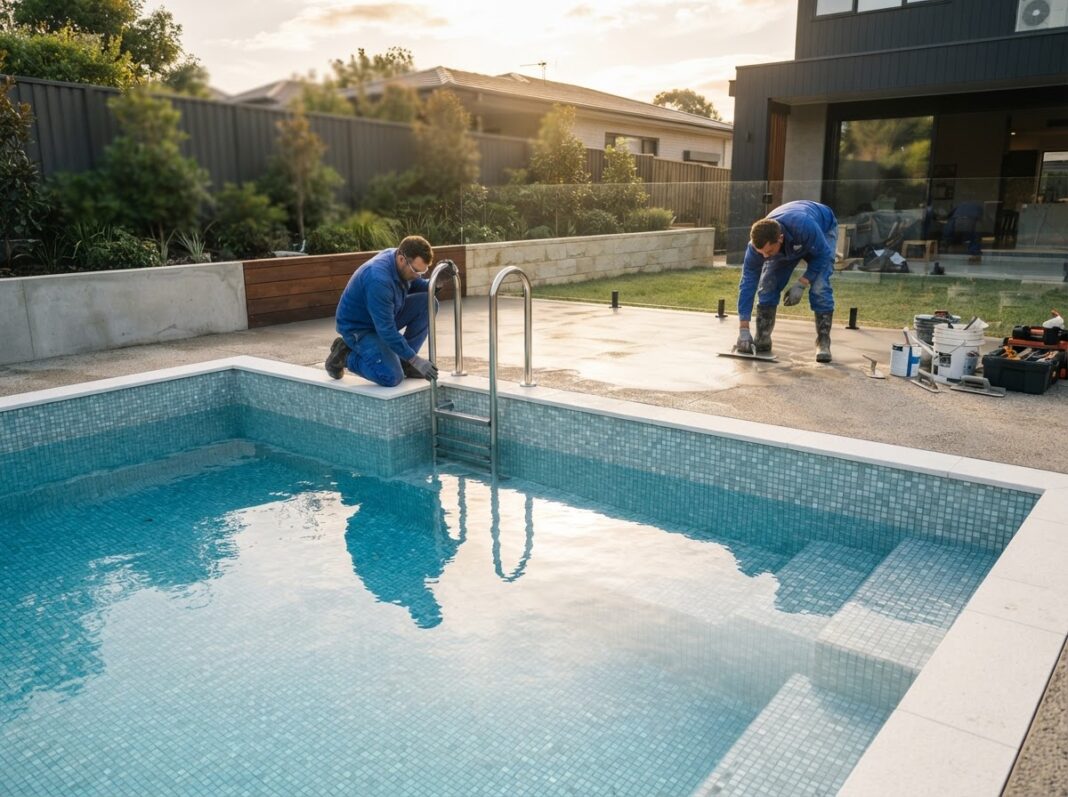

A finished pool photo shows homeowners what they might build. It doesn’t explain what the quoted price covers. Your content should bridge that gap by describing the construction scope, equipment, finishes, surrounding work, and any allowances or exclusions. Pool-contract guidance recommends identifying these items clearly so customers can understand the proposal rather than judge it by the total alone.
The goal is transparency: helping homeowners recognize what they are buying before they approve the project.
Show What Sits Behind the Price
“Pool construction” can sound like one service, but an estimate may cover several stages and systems.
Explain which elements your company includes, such as design and engineering, permit coordination, excavation, the pool structure, plumbing, equipment, electrical work, finishes, startup, and cleanup. Pool-contract guidance identifies these as major categories customers should understand—not items they should assume are automatically included.
Your content does not need to list every fitting. It should make the major responsibilities clear and direct customers to their project-specific written scope.
Define the Pool and the Surrounding Work Separately
A homeowner may see decking, lighting, landscaping, and an enclosure in your project photos and assume all of them are part of your standard estimate.
Describe what belongs to the pool itself and what is included around it. Relevant details can include dimensions, depth, steps, benches, a sun shelf, a spa, coping, tile, deck material, and drainage work. Contract guidance recommends identifying these features explicitly.
Keep photographs and captions accurate. If another contractor handled the landscaping or enclosure, say so. If a feature is an optional upgrade, label it that way.
Explain Allowances Before Selections Change the Total
An allowance is a budgeted amount for an item that has not been fully selected or priced. It is not the same as an unlimited choice included in the contract.
Pool estimates may use allowances for items such as tile, coping, pavers, lighting, or equipment selections. Guidance recommends stating the allowance amount and explaining whether it covers labor, delivery, installation, and taxes—not just the product.
A plain-language example can help:
“Your estimate includes an allowance for this finish. Once you select the material, we’ll confirm whether it fits that allowance and explain any price difference before proceeding.”
Use that wording only if it matches your actual process.
Make Exclusions Easy to Find
Customers should not have to search for important exclusions in unfamiliar terminology.
Explain work that is outside your scope and who is responsible for it. Depending on the project, exclusions may involve landscaping, sod replacement, irrigation repairs, utility relocation, access repairs, or other property restoration. Pool-estimate guidance specifically recommends reviewing these categories before work begins.sjpoolspa+1
Words such as “by owner,” “if required,” and “subject to site conditions” deserve an explanation. Clarify what they mean and which circumstances could lead to additional work or cost.
Describe How Site Conditions Are Handled
The same pool design can involve different preparation requirements on different properties.
Restricted access, rock excavation, groundwater management, retaining structures, and utility changes are examples of conditions that may affect the scope. Pool-estimate guidance recommends identifying what is included, what remains uncertain, and what would trigger an added charge.
Your content can explain how your company assesses these conditions and communicates changes. Avoid suggesting that every uncertainty can be eliminated before excavation.
Distinguish the pricing arrangement as well: a fixed price, an estimate, and a proposal containing allowances are not interchangeable descriptions. The written agreement should identify the basis of the price.
Help Customers Compare Scope—not Just Totals
Two proposals may look similar at first while covering different quantities, materials, equipment, or related work.
Give homeowners a practical comparison checklist:
- Pool dimensions and features.
- Finish and material specifications.
- Equipment and controls.
- Decking quantities and boundaries.
- Electrical and permit responsibilities.
- Allowances, exclusions, startup, and cleanup.
Pool-contract and allowance guidance recommends comparing these details to understand what each price actually covers.
Don’t assume a lower competitor quote omits necessary work. Help the customer ask specific questions and compare equivalent scopes.
Turn the Explanation Into Useful Marketing Content
You can address these questions before the estimate appointment through:
- A “What Our Pool Estimates Include” page.
- A short video walking through an example scope.
- Project posts identifying included features and optional additions.
- An FAQ explaining allowances and exclusions.
- A pre-consultation checklist.
Keep general content consistent with your actual proposals. It should explain the process—not replace the project-specific estimate and agreement.
Your finished projects create interest. Explaining the estimate helps homeowners understand the commitment behind them: what your company will deliver, what remains to be selected, and which responsibilities fall outside the quoted price.