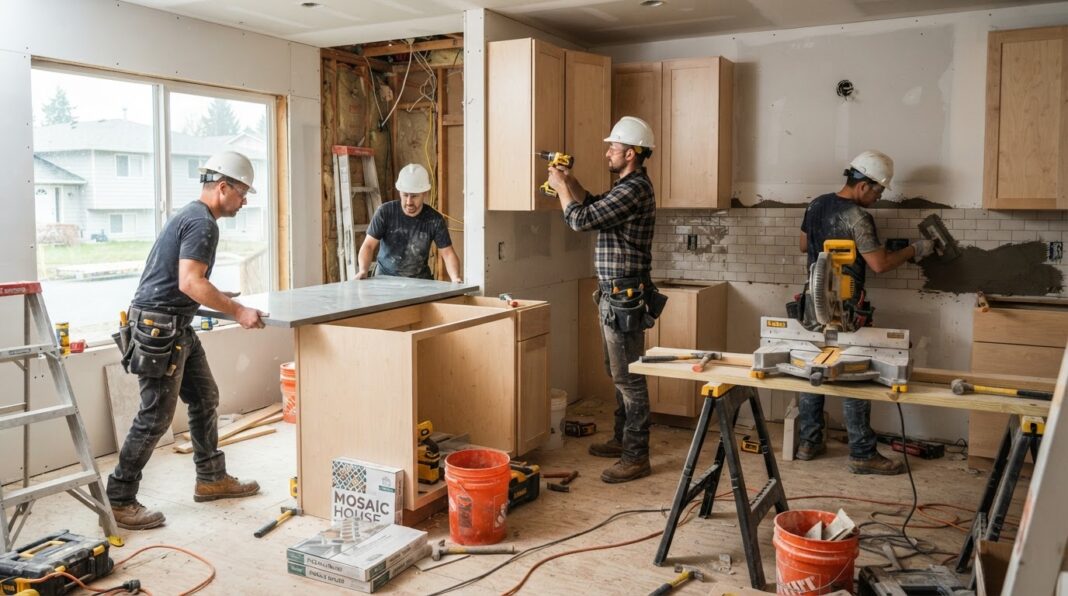
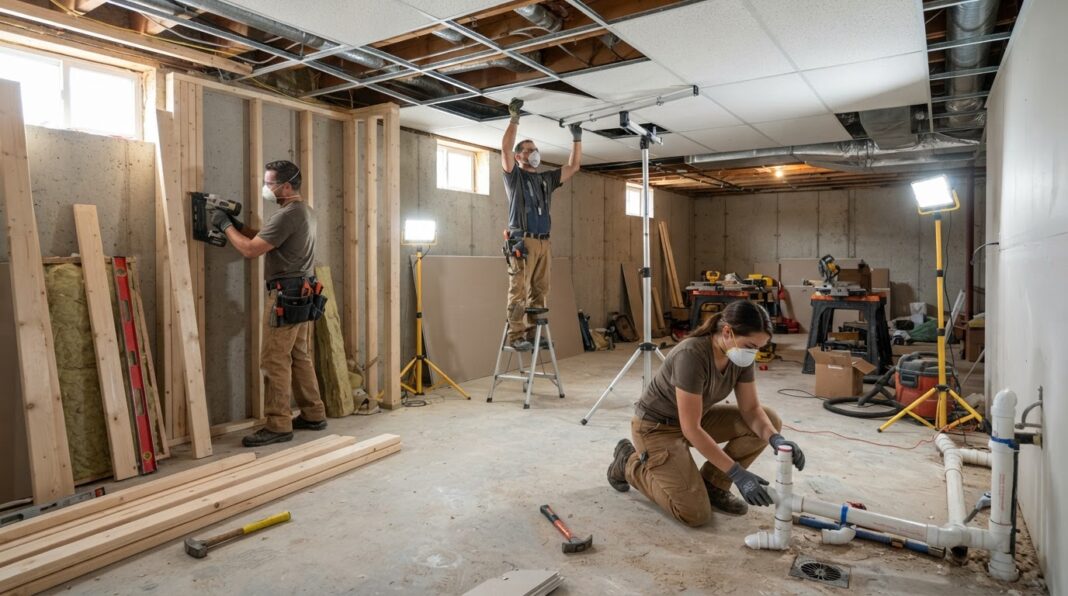

A full-basement gallery shows the overall transformation. But bathrooms and wet bars deserve closer attention because each involves its own customer goals, layout decisions, installation work, and finish selections. Giving them dedicated project stories helps explain details that can disappear inside a general “basement completed” post. A published basement-remodel case study, for example, separately describes the bathroom’s fixtures and ventilation and the wet bar’s seating, storage, refrigeration, and lighting.
The value is specificity: showing prospective customers how you approached the feature they are interested in—not just the basement surrounding it.
Explain the Purpose Behind Each Space
A bathroom and a wet bar serve different needs, even when they belong to the same remodel.
The bathroom story can explain the customer’s requirements, the available footprint, and the fixtures selected. The wet bar story can focus on preparation space, serving, seating, storage, and its connection to the entertaining area. Worthington’s Westfield basement case study illustrates this distinction: the bathroom includes a tub-and-shower alcove and vanity, while the bar combines a lower preparation counter with raised seating, a sink, and beverage refrigeration.
For your own project, start with the actual customer goal. What did they want to do in the space, and how did that influence the design?
Show the Planning Hidden Behind the Finishes
Finished photos show cabinetry, countertops, tile, and fixtures. They don’t necessarily explain why those features were positioned where they were.
A dedicated story gives you room to discuss relevant planning decisions. Basement remodeling examples show how plumbing connections, existing building features, and lighting plans can influence the finished layout.
Include selected progress images when they help explain the work. Describe what your team actually handled and distinguish it from work performed by trade partners.
Avoid implying that every basement requires the same plumbing changes or installation approach. Explain the conditions and decisions specific to the project.
Give the Details Room to Be Seen
One wide-angle basement photo may show where the bathroom and bar are located, but it won’t reveal much about either space.
Build each story from a small, purposeful image set:
- An overall view showing its relationship to the basement.
- Before-and-after images, where available.
- Close-ups of relevant finishes and features.
- Selected progress photos.
- A caption explaining each image’s significance.
A real wet bar case study uses details such as floating shelves, tiered countertops, a backsplash, and pendant lighting to explain both appearance and function. The same project describes the bathroom separately through its fixtures, cabinetry, flooring, and exhaust fan.
That level of context makes the photographs more informative than a finished-room reveal alone.
Help Customers Find a Relevant Example
Someone considering a basement bathroom may want to examine bathroom layouts and finishes. Someone exploring a wet bar may be more interested in cabinet configurations, appliances, and seating.
Dedicated stories give you material organized around those questions. Wet bar design guidance, for instance, distinguishes straight-run and L-shaped layouts because they use space differently. Your project story can show the configuration you built and explain why it suited that customer’s basement.
Present the project as an example, not a universal recommendation. Another home may have different dimensions, existing services, or requirements.
Explain Scope Before Discussing Price
A photograph of a finished wet bar cannot tell a homeowner everything included in the job. The same is true of a basement bathroom.
A project story can distinguish cabinetry and finishes from plumbing, electrical work, preparation, and other relevant scope. Published basement-remodel examples explain that planning these elements together helps coordinate layout, lighting, storage, and finish selections.
If you share a price or timeline, state what it covered and which circumstances affected it. Don’t present one project’s budget as a reliable quote for another customer’s home.
Keep the Individual Stories Connected to the Whole Remodel
Giving these features their own stories does not mean treating them as unrelated projects.
Show how each fits into the overall basement: its location, connection to adjoining areas, and relationship to the broader design. Country Creek Builders’ project examples describe wet bar placement in relation to entertainment zones and bathroom plumbing, illustrating why the whole-basement context still matters.
A practical content structure is:
- One overview of the complete basement remodel.
- A dedicated bathroom story.
- A dedicated wet bar story.
- Links between all three.
This lets you explain the overall transformation without losing the details that made each feature work.
Your full-basement photos show the big picture. Dedicated bathroom and wet bar stories explain the decisions within it—giving prospective customers a clearer understanding of your work and a more relevant starting point for discussing their own project.