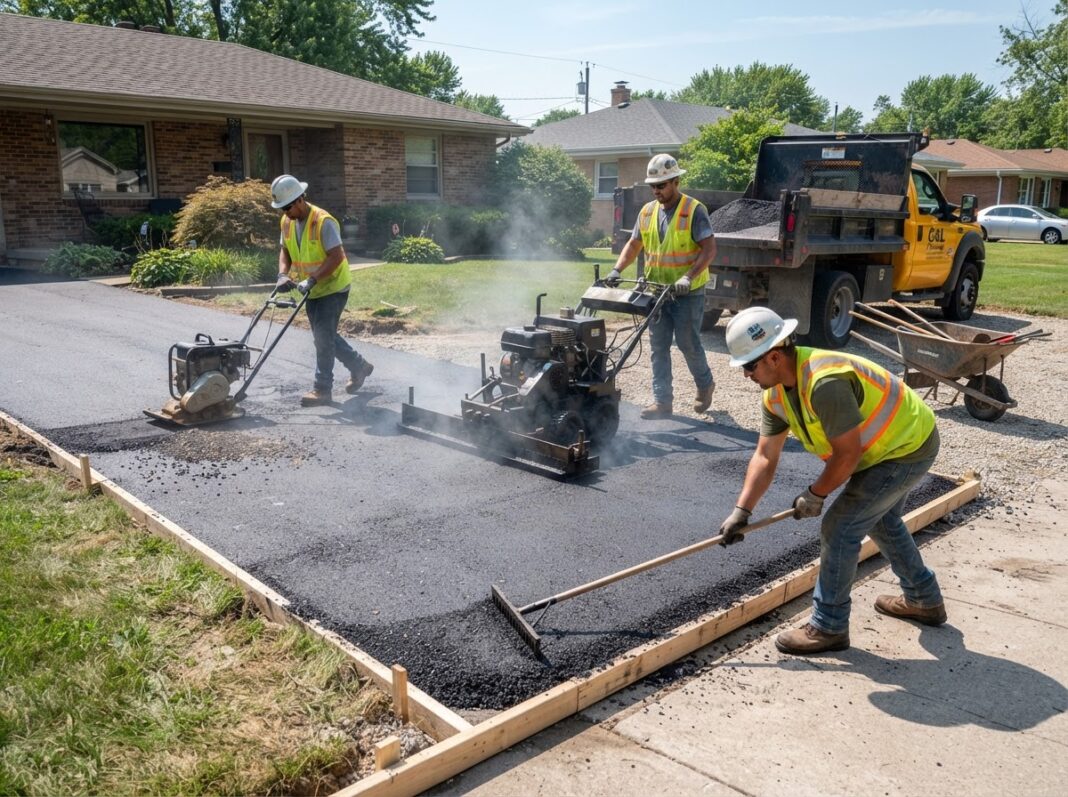

Your company may offer asphalt, poured concrete, and interlocking pavers, but customers aren’t necessarily looking for the same thing when they research each service. They may be comparing installation options, planning a repair, or exploring a particular finish or design. Separate content lets you explain the relevant service, show matching projects, and answer the questions that apply to that work. Paving marketing guidance recommends dedicated service pages rather than placing every offering under one general “paving” description.
The goal is relevance: helping customers quickly recognize the service that fits their project.
Speak to Different Project Priorities
A property manager researching asphalt resurfacing has a different project from a homeowner exploring a decorative concrete patio or an interlocking paver driveway.
Your content should reflect those differences rather than repeat the same sales message with a different material name. Concrete and paving marketing guidance recommends highlighting specific specialties, including commercial lots, asphalt resurfacing, concrete driveways, patios, and decorative concrete.
For example, you could organize content around questions such as:
- Asphalt: What work does the existing surface need, and what is included in the proposed scope?
- Poured concrete: Which finishes do you offer, and what will the installation involve?
- Interlocking pavers: Which patterns, colors, and project types can your company install?
These are useful starting points—not assumptions that every customer choosing a material has identical priorities.
Show Projects That Match the Service
A general gallery may demonstrate that your company stays busy, but it makes visitors sort through unrelated examples.
A customer interested in pavers should be able to find paver projects. Someone considering concrete replacement should see relevant concrete work. Paving marketing guidance recommends pairing dedicated service pages with project examples that demonstrate experience in that particular offering.
For each project, identify:
- The material or paving system.
- The installation, replacement, or repair scope.
- Relevant preparation and progress stages.
- The completed result.
Be clear about terminology. Interlocking concrete pavers are made from concrete, but they are not the same installation system as poured concrete. Your navigation should make that distinction understandable rather than treating “concrete” and “pavers” as interchangeable labels.
Explain the Process Behind Each Price
A single “paving cost” explanation cannot adequately describe every service.
Preparation, installation methods, finishing, and repair options differ among asphalt, poured concrete, and paver systems. Material-comparison guidance discusses these differences, including asphalt resurfacing, decorative concrete finishes, and individual paver replacement.
Use separate content to explain what your actual estimate includes:
- Removal or treatment of the existing surface.
- Base or substrate preparation.
- Material specifications.
- Installation and finishing work.
- Cleanup and project-specific exclusions.
Avoid universal claims that one option is always cheapest, longest-lasting, or easiest to maintain. Explain the proposed system and site conditions rather than relying on a broad material ranking.
Answer Material-Specific Maintenance Questions
Customers also need to understand what happens after installation.
Asphalt content may address the maintenance services your company provides. Concrete content can explain care requirements for the particular finish or treatment installed. Paver content can discuss joints and localized repairs where relevant. These are different topics, and material-comparison guidance treats them separately.
Keep advice specific to the installed product and project. Don’t publish one maintenance schedule as though it applies to every surface, climate, and use.
Match Search Content to the Service Being Researched
Someone searching for asphalt paving is expressing a different need from someone searching for a paver patio.
Dedicated pages give you room to explain each service clearly, include relevant project photos, and answer its common questions. Paving SEO guidance specifically recommends separate asphalt and concrete pages when a contractor offers both, while paver marketing guidance recommends service-specific pages and portfolios.
That does not mean creating nearly identical pages with a few words changed. Each page should contain genuinely useful information about the service. Separate pages are a clarity and targeting tool—not a guarantee of search rankings.
Keep One Brand, but Give Each Service Its Own Story
Distinct content does not require three separate brands or social media accounts. You can maintain one company identity while organizing your website and posts around clearly defined services. Paving marketing guidance recommends a single website structure with individual service pages, a project gallery, and supporting educational content.
A practical approach is to build:
- A dedicated page for each major service you actually offer.
- A relevant collection of completed projects for each.
- Service-specific answers about process, scope, and care.
- Social posts that link to the matching page.
- Contact forms or inquiry options that let customers identify their project type.
Your overall message can remain consistent: who you are, where you work, and how you serve customers. The service content should be specific enough that an asphalt, concrete, or paver customer does not have to guess whether your experience matches their needs.