
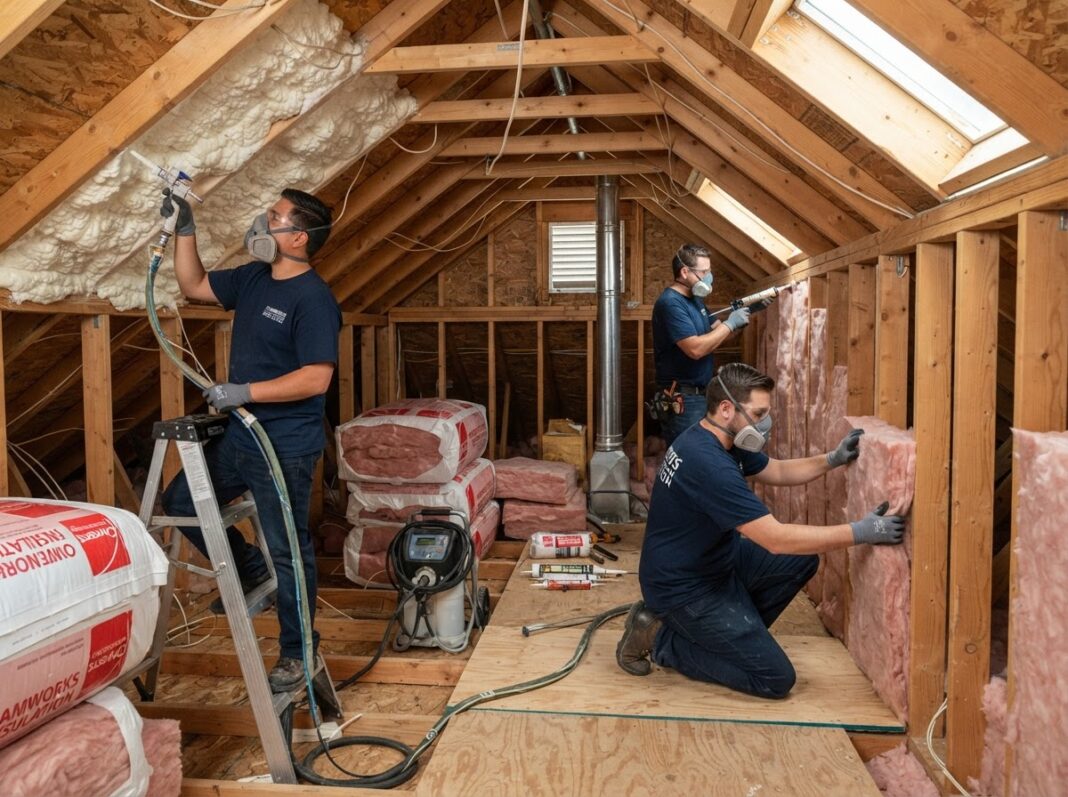

Homeowners need to understand more than which insulation you install. They also need to know how you assess their home, explain your recommendations, prepare for the work, and handle completion. Customer guidance for hiring insulation contractors specifically encourages questions about scope, materials, air sealing, preparation, cleanup, and responsibility for the job. Explaining those details early gives prospective customers information they need to evaluate your company.
The goal is clarity: helping someone understand what hiring you involves before asking them to approve an estimate.
Start With What Happens During the Assessment
“Schedule a free estimate” tells a homeowner the next step, but not what that step includes.
Explain who visits, which areas you inspect, what access you need, and how you develop a recommendation. For attic projects, existing insulation depth, attic dimensions, and the type of entrance are relevant pieces of information. ENERGY STAR includes these questions in its homeowner guidance.
If your assessment includes moisture checks, photographs, thermal imaging, or other diagnostic work, describe what you actually provide. Don’t imply that every visit includes a comprehensive energy assessment if it does not.
A straightforward explanation helps the customer prepare and sets appropriate expectations.
Connect Your Recommendation to the Home’s Conditions
An insulation recommendation should explain more than a material name and a price. Homeowners need to understand why the proposed work fits the conditions found.
For attic upgrades, for example, ENERGY STAR recommends sealing air leaks in the attic floor before adding insulation. Explaining whether that work is included helps distinguish the proposed scope from simply adding more material.
Your explanation should identify:
- Which areas you propose to treat.
- Which material and installation approach you recommend.
- What preparation or related work is included.
- Which conditions need attention before installation.
Keep the recommendation specific to the project. Different homes and insulation systems may require different approaches.
Make the Estimate Easier to Understand
A quote labeled only “insulation installation” leaves important questions unanswered.
Homeowner guidance recommends clarifying insulation type and R-value—the measure of thermal resistance—as well as whether air sealing, existing-insulation removal, cleanup, and disposal are included.
A clear scope helps customers compare what contractors are offering, not just the totals. It also gives you a better basis for discussing the price: the work identified, the materials specified, and the services included.
Avoid suggesting that every project needs removal or every optional service. Explain which items apply and why.
Describe What Installation Day Will Look Like
Homeowners may want to know who will arrive, how the crew accesses the work area, what they need to move, and how the property will be protected.
Customer guidance specifically recommends asking what preparation the homeowner must complete and what the contractor handles. It also encourages questions about who performs and supervises the work.
Explain your actual process, including:
- Access and preparation requirements.
- Who the customer can contact with questions.
- Any project-specific restrictions or disruption.
- Cleanup and disposal responsibilities.
- How scheduling changes will be communicated.
Don’t offer a universal timeline or occupancy assurance when those depend on the scope, product, and installation conditions.
Explain How You Close Out the Job
The customer experience should not end with “Our crew finishes installing.”
Describe how you review the completed work, share any documentation, explain applicable warranties, and address remaining questions. Customer guidance recommends clarifying cleanup, quality-control responsibility, and warranty terms before hiring.
Where appropriate, photos can help explain work in areas the homeowner cannot easily inspect. Pair them with a clear scope summary rather than treating images alone as proof of performance.
Put the Process in Your Marketing
You don’t need to wait for a sales appointment to explain these steps. Turn your actual workflow into a concise “What to Expect” page, a short video, or a series of frequently asked questions.
A useful outline is:
- Initial conversation and access requirements.
- Assessment and findings.
- Recommendation and written scope.
- Scheduling and preparation.
- Installation.
- Cleanup, review, and follow-up.
These stages address the practical questions homeowners are encouraged to ask insulation contractors before committing.nealoninsulation+1
Avoid replacing that explanation with guaranteed savings claims. ENERGY STAR notes that results vary with the home’s age, construction, and condition; broad estimates are not promises for an individual project.
Asking for the sale is more meaningful when the homeowner understands what they are approving. Explain the experience first, then invite them to take the next step with a clear picture of the scope, responsibilities, and process.