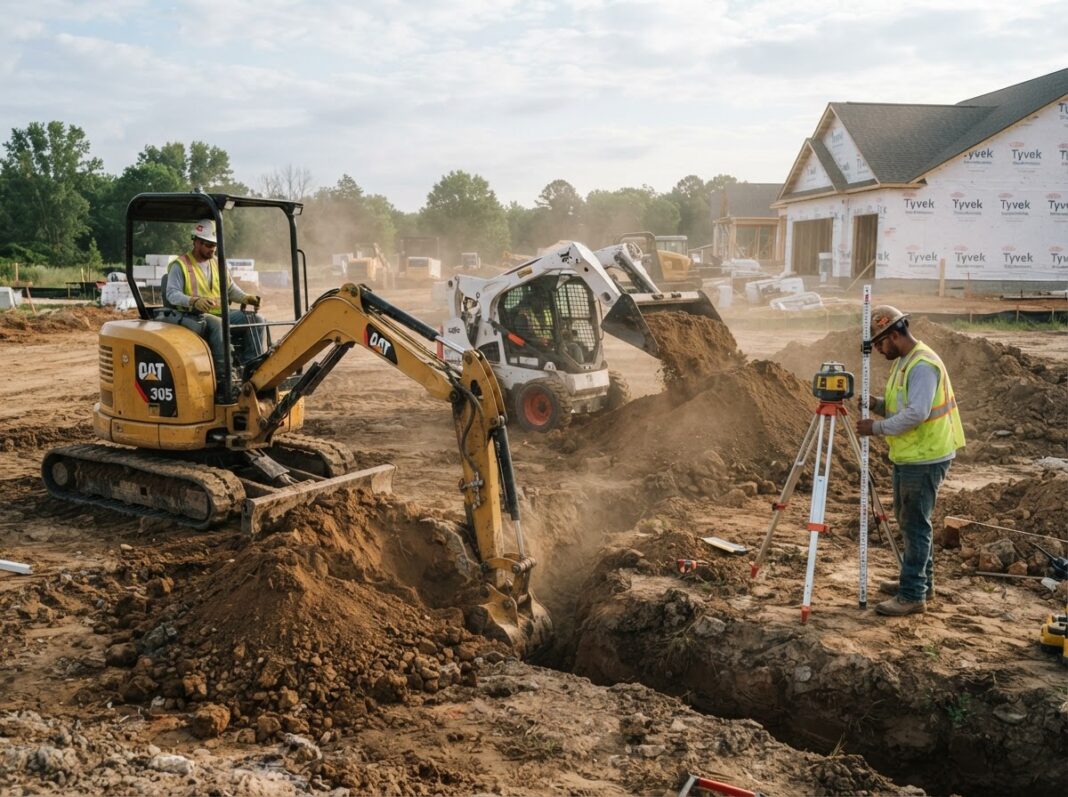

A photo of an excavator, skid steer, or work truck shows what your company uses. It doesn’t automatically explain what your crew can accomplish for a customer. Equipment photos become more useful marketing content when you connect them to a real project: the task, the site conditions, the work performed, and the result. Construction content guidance recommends adding that context so viewers understand the value of the work—not just recognize the machinery.
The goal is to communicate capability, rather than simply display equipment.
Connect the Machine to the Customer’s Need
Your audience may not know equipment models, attachment names, or technical specifications. They are more likely to want to know whether your company can handle their project.
Instead of posting only “Our excavator on the job,” explain what the machine and crew were doing. A useful caption identifies the customer’s goal, the scope of work, and any relevant challenge. Construction storytelling guidance recommends explaining what was done, why decisions were made, and which problems the team addressed.
For example, if it accurately describes the project:
Our crew used this compact excavator to prepare a trench for a new drainage line. The photos show the available access, excavation in progress, and the completed trench before the next installation stage.
That tells prospective customers more than a machine name or a list of specifications.
Show Why the Equipment Fit the Job
An equipment photo can help explain a project decision. Perhaps access influenced the machine selected, an attachment supported a particular task, or the job required several pieces of equipment working in sequence.
Explain the actual reasoning without turning the caption into a technical manual. Construction marketing guidance recommends highlighting site constraints and the decisions that mattered to the outcome.
Useful questions to answer include:
- What task was being performed?
- What conditions affected the approach?
- Why was this equipment or attachment selected?
- How did the work support the next project stage?
Only describe advantages you can substantiate. Don’t claim that a machine prevented damage, reduced costs, or shortened the schedule unless you have a sound basis for that statement.
Include the Crew Behind the Controls
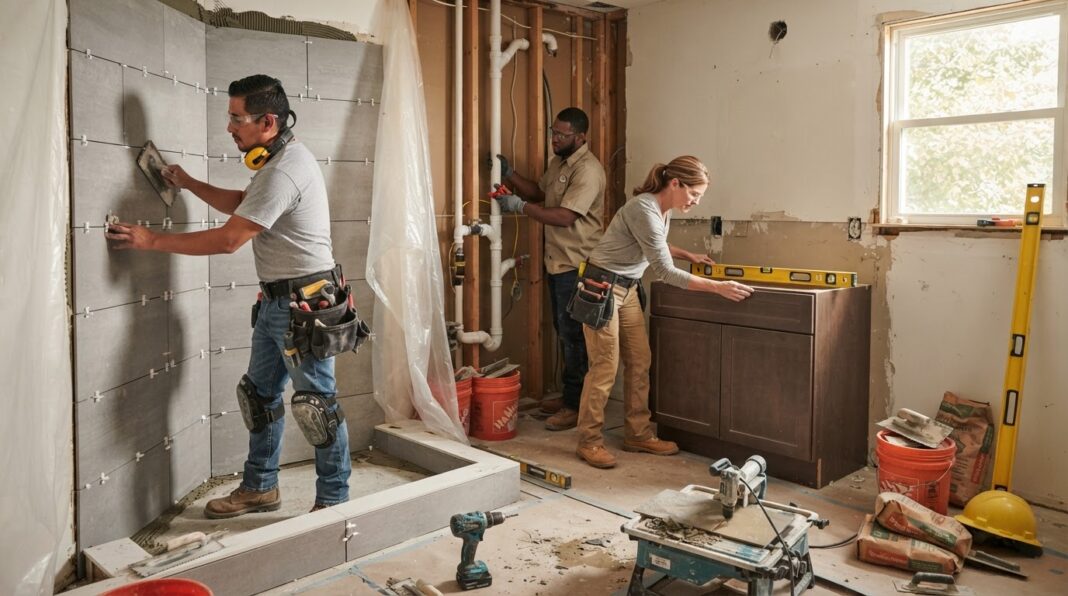
Equipment alone doesn’t tell the full story of your company’s experience. Photos of your team working can connect the machinery with the people planning and performing the job.
Construction photography guidance recommends combining project images with candid team photos to make a business more relatable and communicate its identity. Content guidance also recommends highlighting team members and sharing practical insights from the field.
A short caption might introduce the operator’s role or explain how the crew coordinated that stage of work. Keep the focus on relevant experience and the project—not unsupported claims that a photo proves skill or safety performance.
Pair Action Photos With the Result
A machine moving soil can attract attention, but the finished work explains what that activity accomplished.
Build a short sequence:
- The original site condition.
- The equipment performing a relevant task.
- A key progress stage.
- The completed work.
Construction photography guidance recommends consistent viewpoints, milestone images, and descriptive text to make project transformations understandable.
This gives the equipment photo a role within a larger story. It shows not only that your company was on site, but what your work contributed.
Show the Range of Work You Actually Perform
A collection of equipment photos can support your portfolio when each image connects to a relevant service or project type.
Rather than creating a gallery labeled only “Our Fleet,” use selected photos within project examples for the work your company actually handles. Organize those examples by service, project type, or scale so prospective customers can find relevant experience. Construction content guidance recommends this approach to help buyers understand scope and results.
Be accurate about equipment access and availability. A photographed machine should not imply ownership, permanent availability, or capacity your company cannot provide.
Make Every Photo Answer a Useful Question
Before publishing an equipment image, ask: “What will a potential customer learn from this?”
A strong post gives them something specific—a clearer understanding of your services, an example of a site challenge, or an explanation of your process. Construction content guidance emphasizes turning raw jobsite images into plain-language insight supported by real project details.
Equipment photos still have a place in your marketing. Their value grows when they move beyond “Look at our machine” to “Here is the work our team performed, why this approach mattered, and what we delivered.”